
Rugs live real lives, coffee moments, busy hallways, and pets sneaking a nap. At some point, you face rug repair vs replacement and wonder which path makes sense. We’ll keep it simple and practical. You’ll see how repair and replacement differ, the key factors that guide the call, the Benefits of rug repair, and when to repair or replace a rug with confidence. We’ll share small rules of thumb, a few shop-floor stories, and links for deeper help, without jargon.
Rug Repair and Replacement: What Sets Them Apart
Before diving into details, here’s the big picture. In rug repair vs replacement, repair means stabilizing edges, reweaving small losses, closing tears, fixing fringe, and restoring shape. Replacement means you retire the piece and buy another that fits your room and budget. Which fits your situation? That depends on damage size, structure, cost, timing, and meaning. We’ll unpack those here, then show a clear decision path.
What Counts as Rug Repair
Repair covers edge binding, re-fringing, stitch work on the foundation, securing a selvedge, blocking to square, and small motif rebuilds. We often clean first so the work reads clearly. If you need expert hands early, you can fix the damage the right way. In many rug repair vs replacement calls, stopping unravelling now costs less than replacing later. It also sets up long-term gains you can feel underfoot.
When to Repair or Replace a Rug
Here’s a quick guide. Choose repair if the damage is small, near the edges, and the colors are stable. Choose replacement if the backing is failing, the center field is threadbare, or the color bleed has redrawn the design. Unsure? Ask: Is the repair under half the cost of a similar rug? Will the fix stop further wear? If yes, rug repair vs replacement often leans to repair, especially for pieces with a story.
Key Factors to Help You Decide Between Repair and Replacement
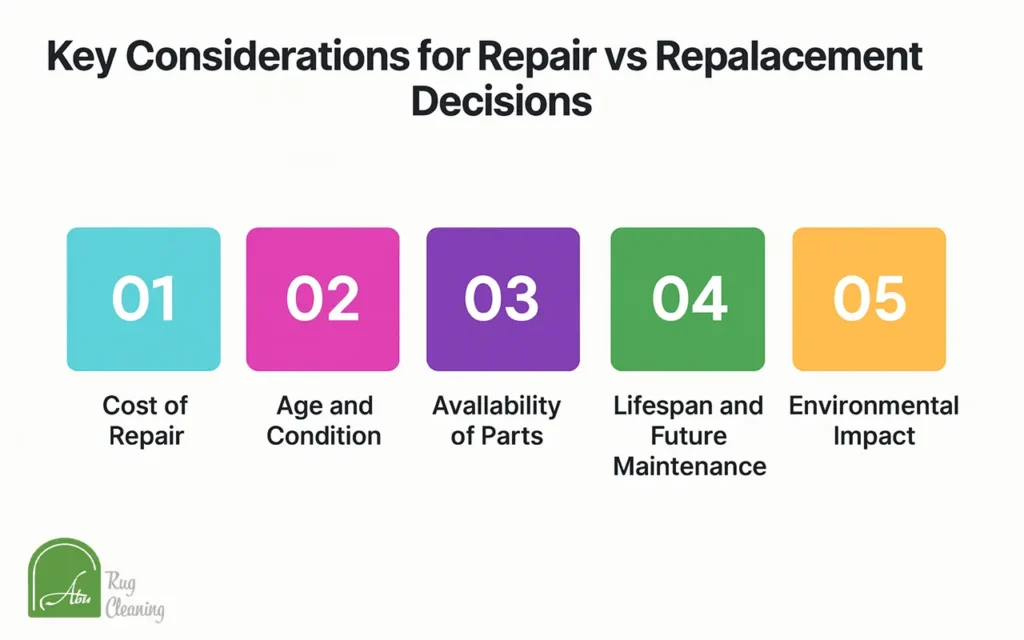
Think through five lenses: structure, spread of damage, material, timeline, and budget. Wool hand‑knotted rugs usually favor repair; tufted synthetics with failing latex often point to replacement. Got a deadline before guests arrive? Quick binding might buy years. On cost, if repair is roughly 20–40% of like‑for‑like, rug repair vs replacement tends to favor repair; above that, revisit your goals. Still torn? A professional cleaning first can reveal the truth under the surface soil.
Benefits of Rug Repair and Why It’s Often the Better Choice
A smart repair protects the foundation, stops edge creep, and preserves design, the quiet benefits of rug repair. You also avoid the hassle of color‑matching a new piece and the risk of buyer’s remorse. If you’re weighing rug repair vs replacement, remember: repair keeps the known quality in your room. We often start with a proper deep wash so stitching and color work sit cleanly and age well.
Preserving Value and Sentimental Worth
Market value matters, but so does the story. Heirloom wool with a tight knot count or a gift from family? Repair lets those memories stay under your feet. That’s a clear benefit of rug repair. Ask yourself: Would replacing this rug feel like losing a chapter of your home’s history? If so, rug repair vs replacement leans toward careful restoration. For many readers, that answer is clear after an honest inspection.
Cost and Sustainability Advantages of Rug Repair
Repair sidesteps the extra costs of replacing, time shopping, delivery, and the risk that a new rug won’t “read” the room the same. It also reduces waste. If a focused edge bind or small reweave stops unraveling, the gains stack up: less expense now, longer life later. On the money side, we keep scopes crisp, bind here, re‑fringe there, so comparisons stay simple.
When Replacement Becomes the More Practical Option

Replacement has its moment. If a tufted rug’s backing crumbles, a central area is bare, or fading has rewritten the pattern, new may be smarter. In rug repair vs replacement, replacement wins when big work won’t restore daily strength or the cost climbs past a sensible range. Want a fresh start or a new size for a changed room layout? That’s a fair reason, too. We’ll still help you confirm when to repair or replace a rug with clear photos.
Signs Your Rug Is Beyond Repair
Look for these red flags: widespread pile loss in the center field, heavy dry rot, delamination, or dye migration that crosses major motifs. If odors return after a pro wash, the foundation may be the issue. In those cases, rug repair vs replacement tilts to replacement. But if the problem is stained by pets and the structure is fine, you might first tackle lingering pet odors, then reassess.
Choosing the Right Time to Invest in a New Rug
Ask three questions: Will the repair hold up under your real traffic? Does the cost feel right for this rug’s quality and role? Do you want a different look anyway? If you say yes to the last two, replacement might be the better move. If you say yes to durability and cost fit, that points back to repair.
Conclusion
There isn’t a single rule for rug repair vs replacement; there’s your room, your budget, and your goals. Use the simple checks here: structure, spread, material, timeline, and cost. Start clean, map the damage, get a clear scope, and compare calmly. With that, you’ll know when to repair or replace a rug, where the benefits of rug repair pay off, and when a new rug is the right call. Have photos and measurements ready? We can talk it through together.

